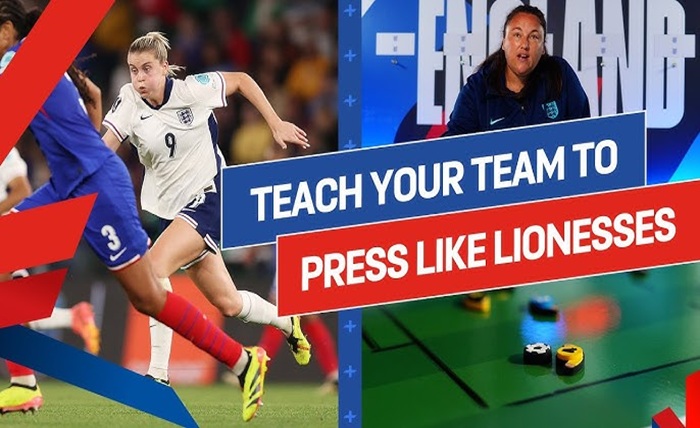
High-pressing football has moved from niche tactic to mainstream, and in the 2024/2025 season it has created a distinct group of teams whose matches repeatedly lean towards higher goal totals. For bettors who specialise in overs markets, understanding how and why these sides generate chaotic, chance-rich games can turn a stylistic preference into a structured, value-driven edge.
Why high pressing naturally leans toward goal-heavy matches
High pressing raises the tempo of a match by forcing more actions in dangerous zones, because teams seek to win the ball as close to the opposition goal as possible. When a side defends high and aggressively, successful pressures convert into possession in the final third, producing short attacks and shots from closer range, while failed presses expose space behind the defensive line for counters and direct passes. That combination increases both shot volume and the average quality of chances, which is precisely what over-goal markets respond to over medium samples rather than single matches.
Tactical traits that define successful high-pressing teams
Teams that turn high pressing into a repeatable advantage share more than enthusiasm; they show synchronised movement, compact lines, and the fitness to sustain intensity across 90 minutes. A high defensive line compresses the playing area, cutting the opponent’s passing options and shortening the distance between regaining the ball and being in a shooting position, but it only works when players move as a unit and cover for each other during missed tackles. Sides that manage these details well tend to force opponents into long passes and rushed clearances, which data from recent seasons in top leagues associates with more turnovers, transitions, and ultimately more goal-scoring opportunities.
How 2024/2025 trends show the rise of pressing intensity
Across major leagues in 2024/2025, tactical trend analyses highlight an uptick in high turnovers, pressures near the opponent’s goal, and aggressive pressing of short goal kicks. FIFA’s work on recent tournaments notes that several leading clubs now spend large portions of their defensive time in a high press while also maintaining one of the highest average defensive-line heights, showing that this is not an occasional tactic but a core identity. League-wide style studies, such as those on Premier League playing patterns, further show that teams with frequent high turnovers are among the best at converting those moments into shots, even if their overall possession share is modest.
Examples of high-pressing profiles that favour overs bettors
Modern examples from European leagues illustrate the profile bettors should watch for rather than giving a single blueprint club. Data shows that sides generating large numbers of high turnovers within 40 metres of the opposition goal, such as Manchester City, Liverpool, or pressing-intensive mid-table teams like Bournemouth, consistently rank near the top in shots emerging from these situations. Although conversion from these chances is not always efficient, the repeated creation of dangerous situations from high regains produces the kind of shot volume and volatility that increases the likelihood of matches clearing popular lines such as over 2.5 or over 3.5 goals.
The link between high pressing and over-goals markets
Over-goals markets are effectively pricing tempo, chance creation, and defensive risk rather than simply “attack versus defence.” Studies on profitable over/under models show that looking at underlying drivers of goals—shots, territory, and attacking pressure—beats naïve reliance on recent scorelines, and high-pressing metrics fit naturally into this cause-based framework. When a team consistently ranks high for pressures in the final third, high turnovers, and forced long balls from opponents, bettors can infer a structural bias towards matches with more opportunities, which, over a large sample, tends to support an elevated probability of overs relative to stylistically cautious sides.
When high pressing stops being an edge for overs
However, there are scenarios where high pressing does not translate cleanly into profitable over-goal bets, especially when finishing or game-state dynamics intervene. Tournament analyses point out that although high presses can generate high-quality chances, the conversion rate can remain surprisingly low due to the chaotic nature of these moments and the technical demands on attackers arriving at speed. Additionally, once a pressing team takes an early lead, they may selectively reduce intensity to protect energy levels, causing the match tempo to drop and potentially undermining expectations of a continued chance-fest for the remainder of the game.
Using data-driven betting logic to evaluate pressing teams
For bettors adopting a data-driven perspective, pressing statistics can be integrated into models that aim to predict totals more accurately than headline goal numbers. Metrics such as high turnovers, passes per defensive action (PPDA), defensive line height, and share of pressures in the attacking third function as proxies for how often a team forces unstable phases of play, which is more predictive of future goal events than last week’s score. In practical terms, bettors track season-long trends rather than one-off outliers, adjusting team totals and “true” over probabilities incrementally as pressing intensity strengthens or fades due to schedule congestion, injuries, or tactical tweaks.
Interpreting odds movement around high-pressing sides
Odds interpretation becomes particularly important once the market recognises a team’s pressing profile and starts to adjust totals lines upwards. Analyses on modelling over/under prices show that value appears not when a team is simply high-scoring, but when the implied probability of, for instance, over 2.5 goals sits below what performance metrics would justify, taking into account attacking pressure drivers. In that context, some bettors pay attention to how a sports betting service such as แทงบอล adjusts its totals or first-half goal lines when high-pressing sides face either build-up oriented opponents, which invite pressure and risk, or more direct teams, which may bypass the press and alter the expected rhythm of the match, allowing a nuanced reading of when the line has moved too far or not far enough.
How live-game dynamics change the value of pressing information
Once a match kicks off, the real intensity of the press can differ significantly from pre-match expectations, altering the live probabilities of various goal thresholds. In-play tracking of metrics such as early high turnovers, repeated short goal kicks under pressure, and defensive line height can indicate whether a supposed pressing team is actually committing to their plan or conserving energy, which directly affects whether overs remain attractive or become overpriced. Live bettors who respond quickly to visible drops in pressing aggression—perhaps after an early yellow card to a key presser or signs of fatigue in a congested schedule—can avoid chasing overs in games that are sliding towards calmer, lower-event patterns.
When high pressing fails to support profitable overs
High pressing can backfire tactically and statistically, creating traps for bettors who treat it as an automatic green light for goals. If an opponent adapts by going long early and often, match sequences may become aerial duels and second-ball contests in deeper zones rather than continuous attacks in the final third, which can depress shot quality even if the game still feels intense. Moreover, fixtures between two high-pressing sides sometimes neutralise each other as both teams struggle to build controlled attacks, resulting in turnovers in midfield rather than near goal and driving total chances down despite appealing pre-match over lines.
The role of other betting environments for high-press teams
Beyond traditional sportsbooks, the broader gambling space also shapes how high-pressing teams are perceived by recreational bettors. Many users move between football wagering and other games inside the same digital ecosystem, and that cross-traffic can influence which football markets operators choose to highlight, from over/under lines to bet builders centred on shots and corners that naturally align with pressing-heavy teams. In that broader context, some bettors note that when a casino online website aggressively promotes accumulator-style products tied to goals and offensive statistics, it becomes crucial to separate genuine pressing-driven edges from marketing-driven narratives that may encourage overs even where underlying data is neutral.
Summary
The 2024/2025 season confirms that high pressing is not merely a visual style but a structural driver of match tempo, shot volume, and volatility—key ingredients for goal-heavy encounters. Successful high-pressing teams compress space, force long balls, and generate repeated high turnovers, which boosts the long-run likelihood of overs while still leaving room for tactical and finishing-related failures in specific matches. Bettors who move beyond surface-level goal counts and instead focus on pressing metrics, odds movement, and game-state dynamics stand the best chance of identifying when these teams genuinely offer an edge in over-goals markets and when the style has already been fully priced into the line.